
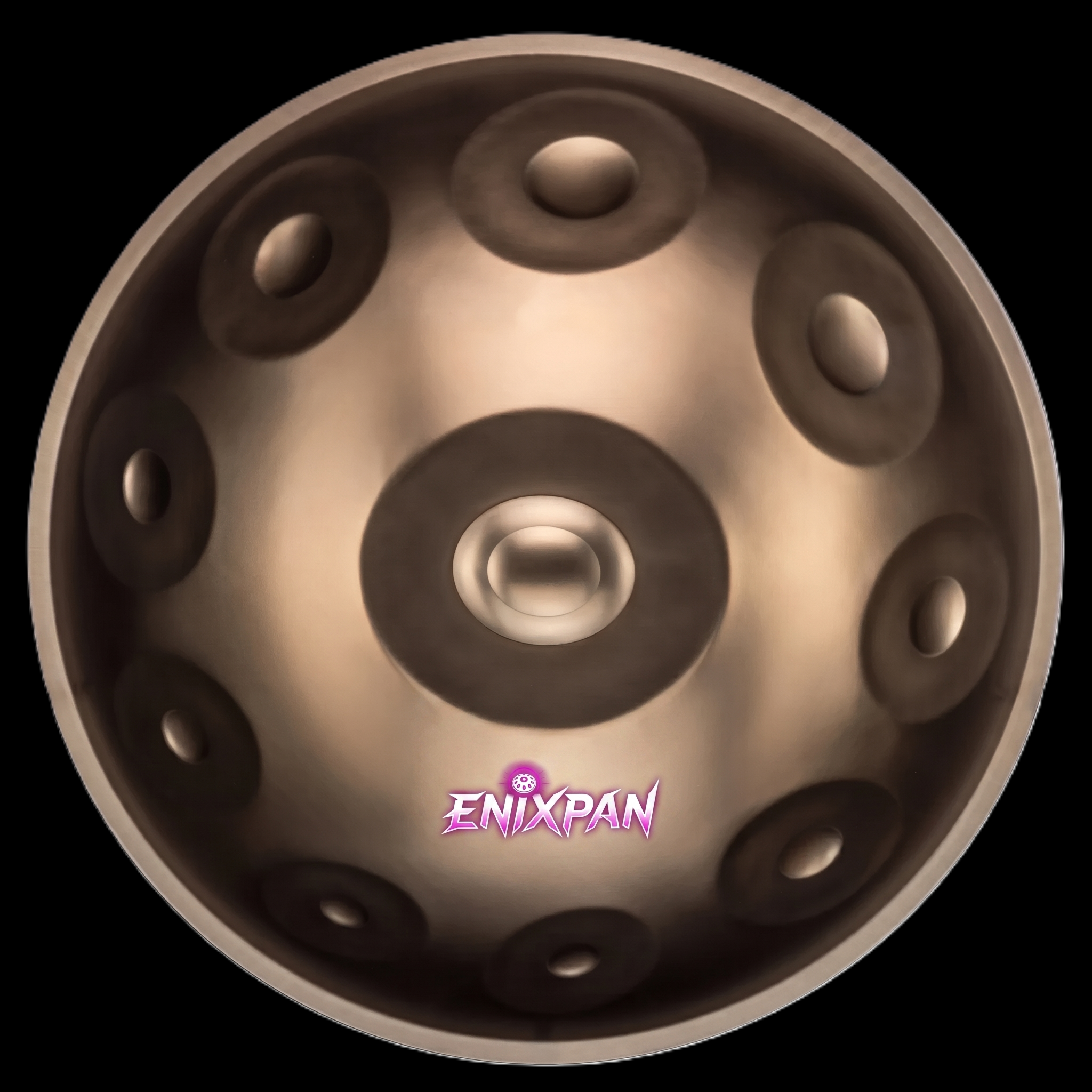
D Minor (Kurd) · 13 notes (10 + 3)
Enixpan D Kurd 13 Notes
Extended version of the famous D Kurd with 3 bass notes (F3, G3, D5) on the bottom shell for remarkable harmonic depth.
D3A3B♭3C4D4
E4F4G4A4C5
F3G3D5
2 models from €2,790 to €2,390, with a bottom shell for an extended harmonic range. For those who want to compose, improvise and explore further.
Our intermediate handpans add bass notes on the bottom shell — playable from the same playing position. This configuration opens up new melodic dimensions: deep bass, full chords, orchestral compositions.
Bottom shell included — bass notes for unprecedented harmonic richness.
Extended version of the famous D Kurd with 3 bass notes (F3, G3, D5) on the bottom shell for remarkable harmonic depth.
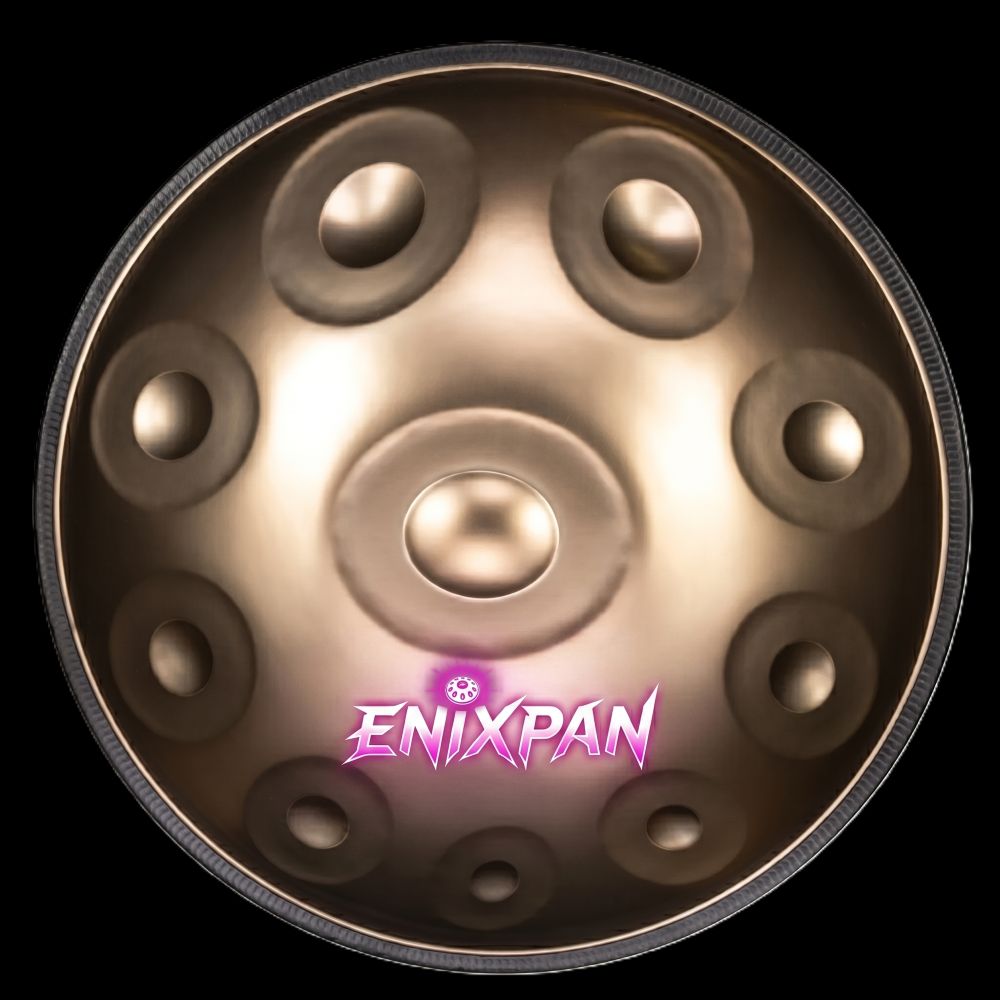
The Ashakiran in its most complete version, with 5 bass notes (E, F#, G, C#, D) on the bottom shell. An almost orchestral range.
Once comfortable on a 9–10 notes, adding bass notes brings new textures without complicating fundamental technique.
The bottom shell lets you create continuous bass lines, opening up compositions with intro, development and conclusion.
Bass notes add an essential body-resonance dimension for professional sound healing sessions.
Intermediate models are perfect for acoustic concerts, guided meditation sessions and public performances. Their extended range captivates the audience.
Try with Nixis View all modelsAn intermediate handpan has a bottom shell with additional bass notes (3 to 5 notes), complementing the 10 notes of the top shell. This configuration considerably broadens harmonic and melodic possibilities for composition and advanced improvisation.
Not necessarily. The D Kurd 13 notes is accessible to motivated beginners. The low notes simply enrich the register. After a few weeks on a 9–10 notes, the transition is natural and rewarding.
The D Kurd 13 is in minor mode (deep, meditative, grounded) with 3 bass notes. The D Ashakiran 15 is in major mode (bright, joyful, uplifting) with 5 bass notes. The 15 offers an even wider range for complex compositions.
The handpan rests on your knees. The top-shell notes are played normally with both hands. For the bottom-shell notes, fingers slide under the instrument to strike the tongues. A technique acquired progressively, in a few weeks of practice.